In google search you can use symbols and words to make the results more precise, tokens like: after:, before:, site:, imagesize:, filetype: and many more.
GPT-style models with a well crafted prompt can be used to have a compiler of sorts for the natural language query, which will be turned into a google-specific query that is more precise and close to what the user is most likely looking for.
And if we tell the "compiler" things like: the user current date and timezone, geographic region---and other info the user might care about, it can take these into account in the final compiled query.
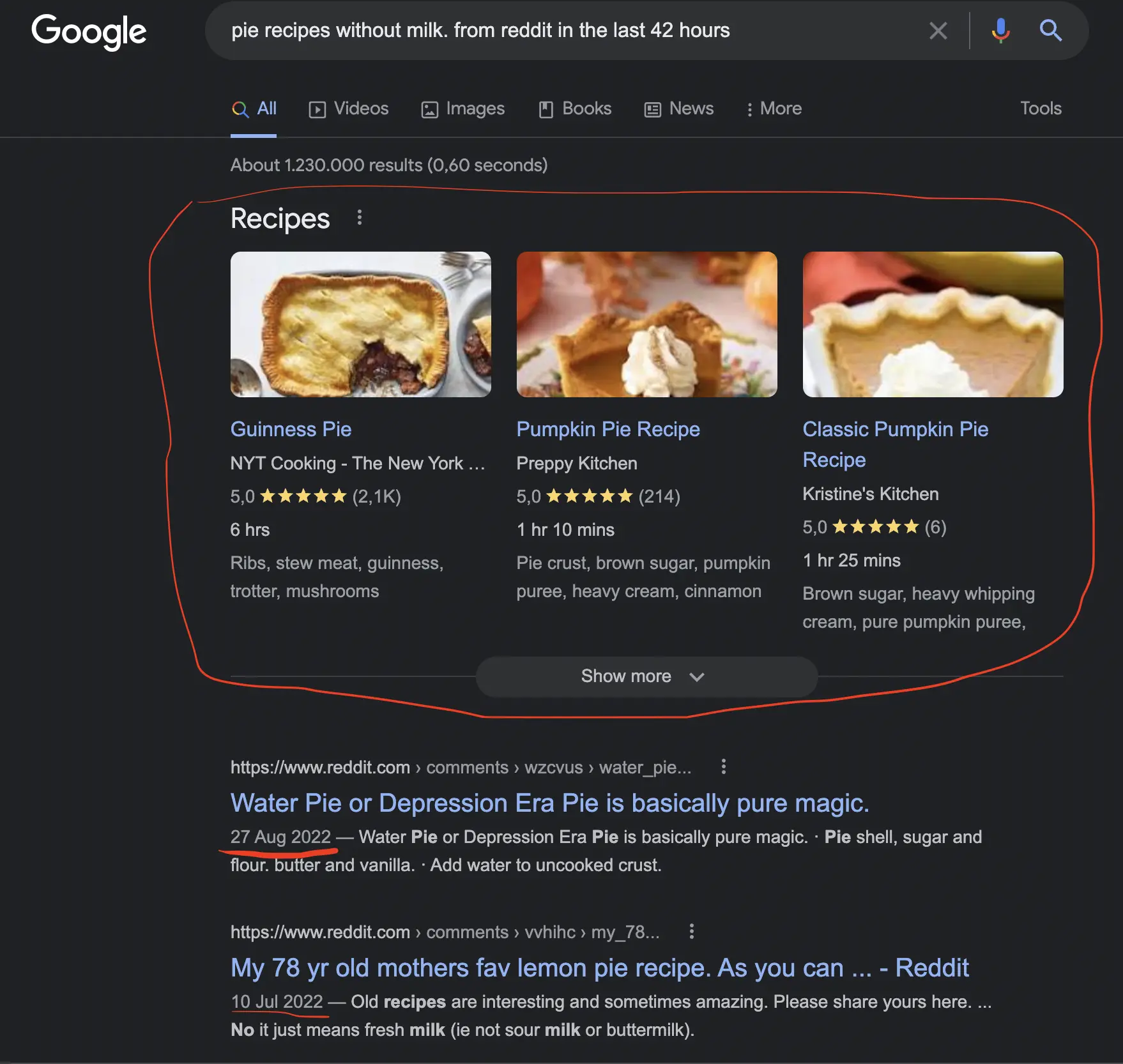
For example, searching on google for: pie recipes without milk. from reddit in the last 42 hours returns:
The same query ran with our demo script gooogle---like google but with one more humpf--outputs the following compiled query: pie recipes -milk site:reddit.com after:2022-10-07 before:2022-10-09 and searching this query on google returns:
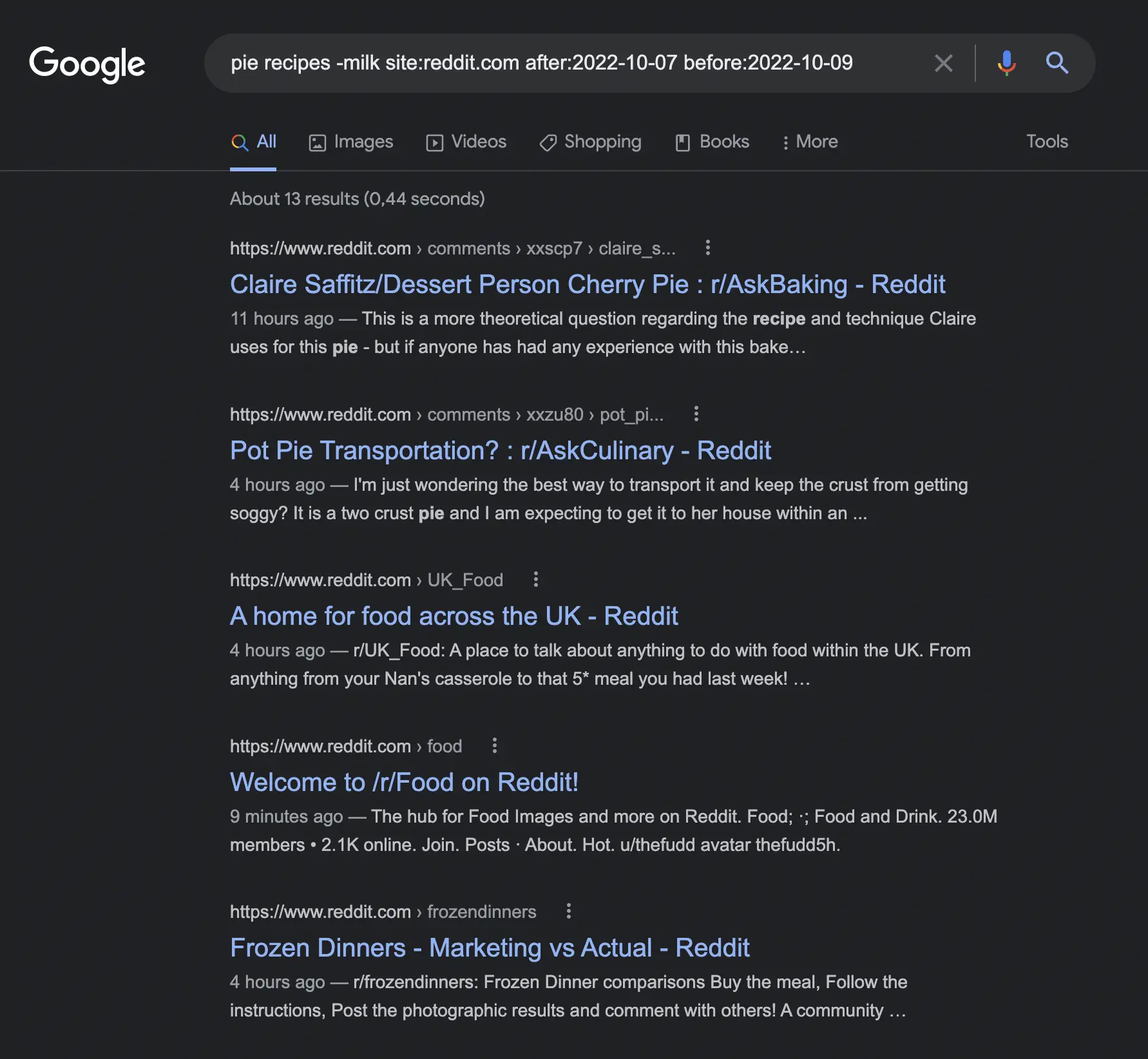
As we can see, we got better results with the same search query for what we were actually looking for--posts no older than 42 hours, from reddit, without milk in this case. With more fine-tuning there's a lot more that can be accomplished without having to know and remember a myriad of magic keywords.
A prototype can be found here.